

Description
Duloxetine Medication – Uses, Dosage, Side Effects & Safety
Duloxetine is prescribed for several conditions, including major depressive disorder, generalized anxiety disorder, diabetic peripheral neuropathic pain, fibromyalgia, and chronic musculoskeletal pain. Because it can affect both mood and pain signaling, healthcare professionals may prescribe it when treatment of these conditions requires an SNRI medication.
Duloxetine is available as a delayed-release oral capsule. Patients should take it exactly as prescribed and swallow delayed-release capsules whole rather than crushing or chewing them. The appropriate dose depends on the condition being treated, the patient’s medical history, response to treatment, and tolerability.
What Is Duloxetine Used For?
Duloxetine may be prescribed for:
- Major depressive disorder
- Generalized anxiety disorder
- Diabetic peripheral neuropathic pain
- Fibromyalgia
- Chronic musculoskeletal pain
The medication may take several weeks before its full therapeutic effects are experienced. Patients should continue taking it according to their prescription unless their healthcare professional advises otherwise.
How Does Duloxetine Work?
Duloxetine is an SNRI antidepressant. It increases the availability of serotonin and norepinephrine in the nervous system. These neurotransmitters are involved in mood, stress responses, and the way the nervous system processes pain.
Duloxetine Side Effects
Common side effects may include:
- Nausea
- Dry mouth
- Constipation
- Diarrhea
- Fatigue or tiredness
- Decreased appetite
- Sweating
- Dizziness
- Sexual side effects
Not everyone experiences these effects, and some may improve as the body adjusts to treatment.
Important Duloxetine Safety Information
Duloxetine carries an antidepressant warning concerning an increased risk of suicidal thoughts and behaviors in children, adolescents, and young adults under 24. Patients, families, and caregivers should promptly contact a healthcare professional if significant changes in mood or behavior occur.
Duloxetine can interact with other medications, particularly MAO inhibitors and other medicines that affect serotonin. Such combinations can increase the risk of serious reactions, including serotonin syndrome.
Healthcare professionals may also monitor blood pressure and consider liver, kidney, bleeding, and other risk factors when determining whether duloxetine is appropriate. Alcohol use can increase certain risks, particularly in relation to liver health.
Duloxetine Dosage
Duloxetine dosage varies according to the condition being treated. FDA prescribing information lists different dosing recommendations for major depressive disorder, generalized anxiety disorder, diabetic peripheral neuropathic pain, fibromyalgia, and chronic musculoskeletal pain.
Patients should never change their duloxetine dose without speaking with their healthcare professional.
Duloxetine should also generally be tapered rather than stopped suddenly because abrupt discontinuation can produce symptoms such as dizziness, nausea, headache, irritability, sweating, sleep disturbances, and sensory disturbances.
Duloxetine Drug Interactions
Before starting duloxetine, patients should tell their healthcare professional about all prescription medicines, over-the-counter products, vitamins, and supplements they take.
Potentially important interactions include:
- MAO inhibitors
- Other serotonergic medications
- Certain antidepressants
- Some pain medications
- NSAIDs and aspirin
- Certain medications affecting liver enzymes
Patients should consult a physician or pharmacist before starting, stopping, or combining medications.
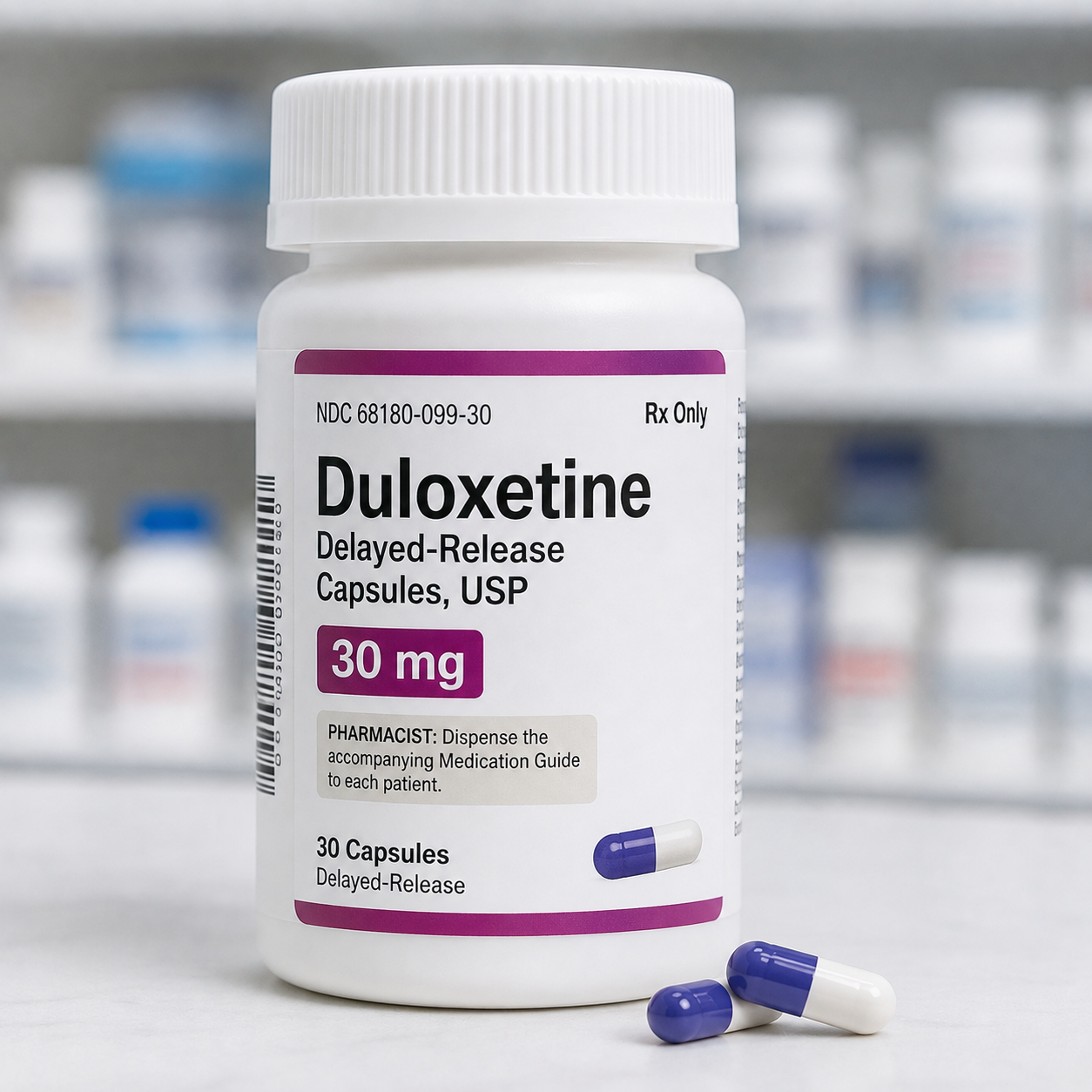
Duloxetine prescription medication, an SNRI used for depression, anxiety and certain chronic pain conditions.
- Duloxetine
- Duloxetine medication
- Duloxetine capsules
- Duloxetine hydrochloride
- Duloxetine uses
- Duloxetine side effects
- Duloxetine dosage
- Duloxetine prescription
- Duloxetine medication information
- Duloxetine for nerve pain
- Duloxetine for anxiety
- Duloxetine for depression
- Duloxetine for fibromyalgia
- What is duloxetine used for
- How does duloxetine work
- Duloxetine side effects and precautions
- Duloxetine for diabetic nerve pain
- Duloxetine for chronic musculoskeletal pain
- Duloxetine medication uses and benefits
- Duloxetine dosage and safety information
- Duloxetine interactions with other medications
What is duloxetine?
Duloxetine is an SNRI prescription medication used to treat conditions including depression, generalized anxiety disorder, diabetic peripheral neuropathic pain, fibromyalgia, and chronic musculoskeletal pain.
Is duloxetine used for nerve pain?
Yes. Duloxetine is used to treat diabetic peripheral neuropathic pain and is also prescribed for certain other chronic pain conditions.
Is duloxetine an antidepressant?
Yes. Duloxetine is an antidepressant belonging to the serotonin-norepinephrine reuptake inhibitor (SNRI) class.
Does duloxetine help with anxiety?
Yes. Duloxetine is indicated for the treatment of generalized anxiety disorder.
Can duloxetine be stopped suddenly?
Stopping duloxetine suddenly can cause discontinuation symptoms. A healthcare professional can recommend an appropriate gradual dose reduction when treatment is being discontinued.
How long does duloxetine take to work?
Some patients begin noticing improvement within the first few weeks, but the full benefit can take 1–4 weeks or longer, depending on the condition and individual response.


Reviews
There are no reviews yet.